
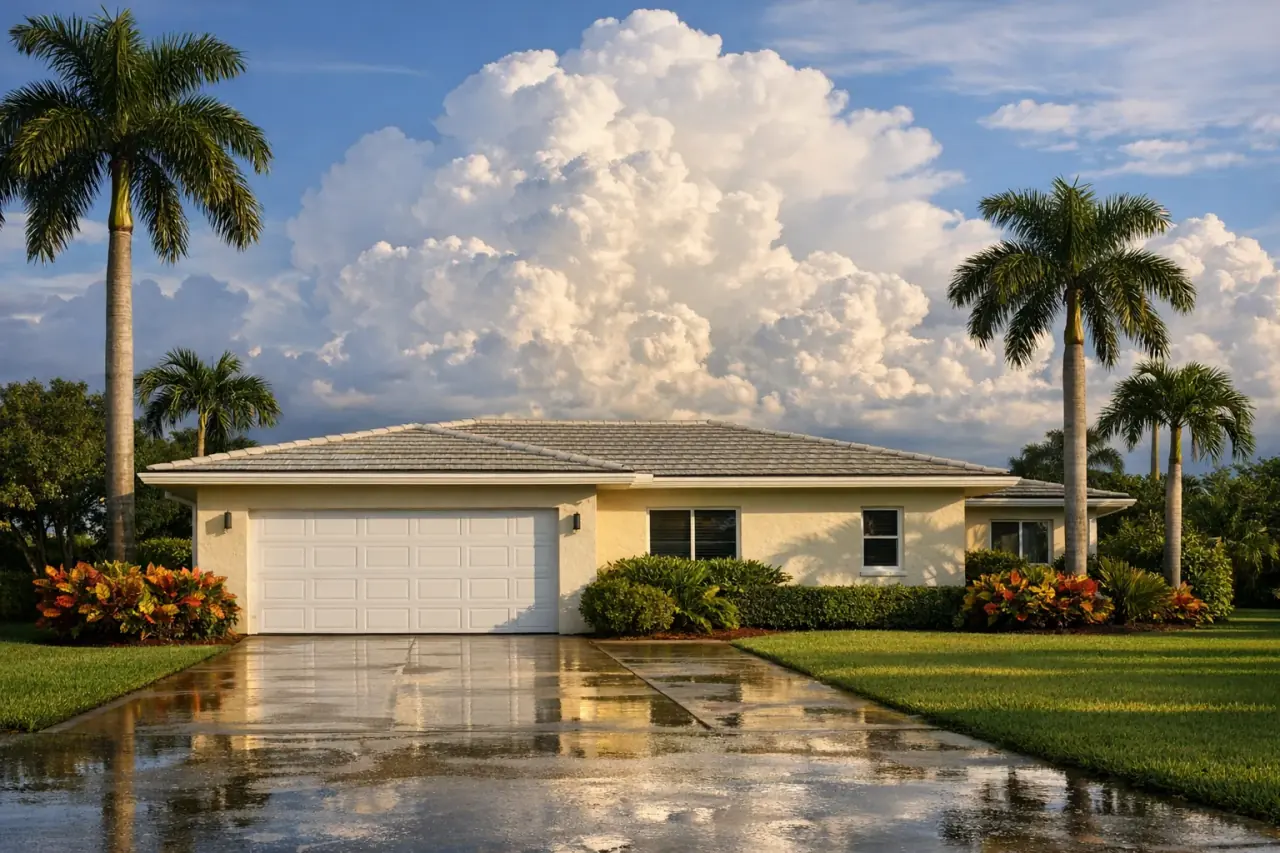
Miami garage doors work hard. They sit in strong sun most of the year, ride out months of afternoon downpours, and are expected to hold when a hurricane pushes through. A door that turns noisy, slow or crooked usually means one of those conditions has worn something out. What follows covers the usual failures, the permit and approval rules, and which months suit each kind of work.
Which office issues your permit
Having Miami on your envelope does not mean the City of Miami issues your permit. Miami-Dade County contains more than 30 incorporated municipalities, each with its own building official, and unincorporated land falls under the county's Department of Regulatory and Economic Resources. Some local ZIP codes cross those lines, so confirm your jurisdiction first. Your property folio number is a quick check: in Miami-Dade, folios that begin with 30 belong to unincorporated parcels.
For houses and townhouses in unincorporated areas, the county runs a fast-track window and door permit for exact changeouts only. Widening the opening, raising it or cutting a new one is not allowed under that process and needs a regular permit instead. A standalone garage door permit closes with a final inspection once the door is fully installed, and an expired NOA, or one written for an older code cycle, will not be accepted. The rest of the paperwork, from application to closed permit, is laid out in our permit write-up.
Reading the label on an approved door
Each Miami-Dade Notice of Acceptance says what the door's permanent label must show and where it goes. On garage door NOAs that is often a side track, the bottom angle or the inner surface of a panel. Look for the NOA number, the words "Miami-Dade County Product Control Approved," the model, the design pressures and whether the door is impact rated. If the label raises more questions than it answers, this explainer on HVHZ door ratings decodes each line.
The pressure ratings are the numbers that matter. Positive pressure is wind pressing the door inward, and negative pressure is suction pulling it outward. Both have to meet what your own opening calls for, so a door rated for a neighbor's house is not automatically right for yours.
The manufacturer or distributor must hand the buyer a complete copy of the NOA, and the building inspector can ask to see it on site. Keep it with your house records, and match any replacement parts to the original approval rather than by size alone.
Summer downpours and the bottom of the door
South Florida's rainy season runs from roughly mid-May to mid-October and brings frequent afternoon thunderstorms. Wind-driven rain and puddles along the threshold mean the lowest foot of the door takes most of the abuse.
Look for a split or flattened bottom seal, rust blisters along the lower edge of a steel door, and corrosion where the tracks meet the floor. Swapping a worn seal and keeping the track bottoms clean and dry are reasonable homeowner jobs.
The bottom brackets are another matter. They anchor the lift cables, which carry the full force of the springs, and a badly rusted one can let go without warning. Leave those fasteners alone and have a technician replace the bracket and inspect the cables.
Sun, heat and humidity on the hardware
Intense sun fades and chalks painted steel, especially on dark doors facing south or west. It also bakes the vinyl weatherstrip on the sides and header until it cracks and lets in rain, dust and insects.
Humidity works on the parts that are harder to see. Damp springs and cables corrode, and a rusted spring is more likely to snap. A light spray of garage door lubricant on hinges, rollers and springs a few times a year helps; putting a wrench or bar on that hardware does not, because the stored load can whip a tool loose and badly hurt the person holding it.
Openers sit in the same hot, damp air. One that strains or hums before the door moves deserves a look before it quits in the middle of storm season.
Working around the seasons
The drier months, roughly November through April, are the easiest window for a replacement. Choosing an approved door, pulling the permit and passing inspection take time, and finishing before hurricane season opens on June 1 means the new door is in place before the first storm threatens.
- November to April: replacements, opener upgrades and a tune-up with a spring balance check by a technician.
- May: replace cracked seals and practice pulling the opener's manual release, with the door fully closed, before the rains and outages arrive.
- June to November: after a strong storm, look for dents, bent track or a crooked door, and stop using it if it binds.
- Mid-summer: clear grit from the tracks and check the bottom edge for fresh rust.
Places with recent service calls
Past service calls have come from these places, and homeowners elsewhere in the county can still request a visit.
Homestead stands out. Hurricane Andrew's eye crossed the city in August 1992 and took out nearly every building, and a housing boom in the mid-2000s brought another wave of new homes. A door from either period is now old enough that it makes sense to have the springs, rollers and opener checked together.
- Miami (33134, 33144, 33146, 33177, 33196)
- Homestead (33030, 33033)
- Opa-locka (33055)
Last updated by the American Garage Door Team.