
Where should you start when a garage door won't open?
Start with the cheapest, safest checks and work toward the mechanical ones. Most of the steps below take less than a minute, and the first five cost nothing but a look around the garage. Keep the door closed while you work; a door that won't open is safer staying down than half up.
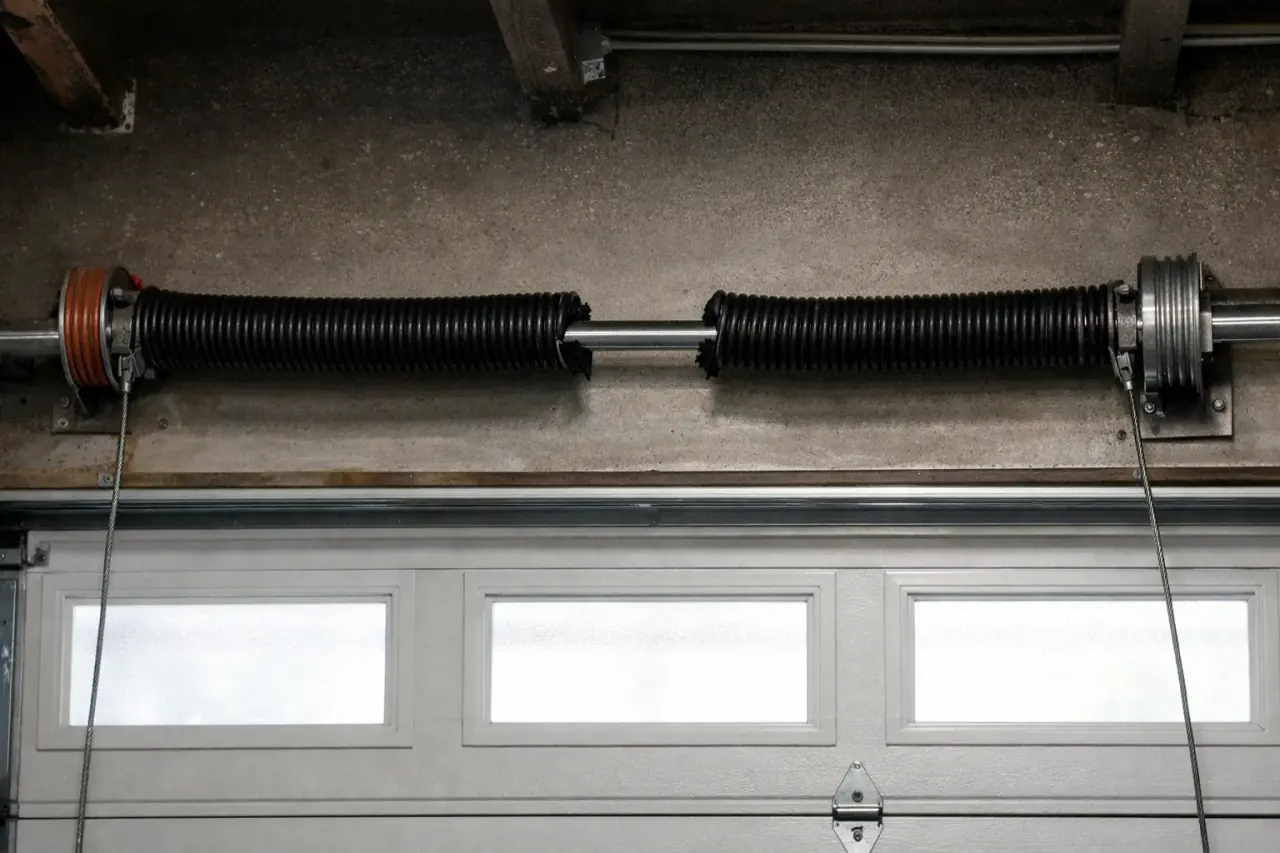
Safety: The springs above or beside the door hold most of its weight. If you see a gap in a torsion spring, a dangling cable, or the door sits crooked, skip straight to calling a technician. Don't pull the emergency release on a door that is partly open with a broken spring, and never try to open a door by prying or by forcing the opener.
Step-by-step: how do you troubleshoot a door that won't open?
- Check for power. Does the opener's light come on, or does the wall control's LED glow? If not, test the ceiling outlet with a lamp. Reset any tripped GFCI (the protecting outlet isn't always the one the opener plugs into) and check the breaker panel.
- Try every control. Use the wall button, a remote and the keypad. If the wall button works but remotes don't, the door and opener are fine; the remotes or the receiver need attention.
- Turn off lock mode. If the wall console has a padlock or vacation button, it may be shutting out your remotes; the indicator usually blinks while it's engaged. Press and hold to switch it off.
- Check the manual lock. Look at the inside of the door for a slide bolt or a T-handle lock. If it's engaged, the opener will strain against it. Unlock it, and ideally disable it permanently on an opener-equipped door.
- Look at the trolley. Find where the door arm meets the rail. If the emergency release has been pulled (by a person, a car antenna or a stored item), the motor will run but the door won't move. Reconnect it according to the manual.
- Listen while someone presses the button. The sound tells you which way to go next; see the section below.
- Inspect the springs and cables. Without touching them, look for a gap in a torsion spring on the bar above the door, a stretched or broken extension spring along the tracks, or a loose cable.
- Test the door by hand. Only if the springs and cables look intact: with the door all the way down, disconnect the trolley using the red release handle and raise the door by hand. It should rise with moderate effort and stay put at waist height.
- Check for ice or obstructions. In freezing weather the bottom seal can stick to the slab. Look along the tracks for anything wedged in the rollers' path.
- Reconnect and retest. If the door lifts easily by hand, the opener is the problem. If it's heavy or uneven, it's a spring or cable problem.
What does each sound or behavior mean?
Nothing at all: no light, no sound
The opener isn't getting power, or its logic board is dead. After confirming the outlet is live, a silent opener usually means a board failure, often after a surge or lightning storm. Board, gear and capacitor failures get a fuller treatment in our opener repair rundown.
A click, but no movement
The board is trying to start the motor. A relay may be failing, the motor may have stalled from thermal overload after repeated tries (wait 15 to 30 minutes and try once), or the door is locked or too heavy.
A steady hum, no movement
Release the button right away. Humming usually means the motor can't turn: a failed start capacitor on many AC units, a stripped gear, a locked door, or a broken spring. Repeated humming overheats the motor.
Motor running, door not moving
The motor is turning but not connected to the door. Either the trolley is disconnected, the chain or belt has come off or broken, or the internal drive gear has stripped. A gear-and-sprocket kit is a common fix on chain-drive models.
The door rises a few inches and quits
This is the classic sign of a broken spring. The opener lifts the door until its force limit trips, then gives up. A frozen bottom seal or a binding roller can do the same. Don't keep trying; look at the springs.
Only one side lifts, or the door goes up crooked
A cable has slipped off its drum or broken, or one of a pair of extension springs has failed. Stop immediately. A crooked door can jam in the tracks or come off them. Learn to spot a failing lift cable.
How do you get the door open in a power outage?
- Make sure the door is fully closed.
- Pull the release handle straight down so the trolley lets go of the door arm.
- Lift the door from the inside handle or the bottom section with both hands, keeping fingers out of the joints between panels.
- Raise it fully so it stays up on its own. If it won't stay up, lower it and leave it closed: a door that won't hold its position has a spring problem, and propping it is not safe.
- When power returns, close the door by hand and run the opener; the trolley re-engages on most models.
If you lose power regularly, an opener with a built-in backup battery avoids this entirely. California requires one on openers sold or installed there. Here's how opener battery backup works.
What if the door is frozen to the ground?
Cold snaps can bond a rubber bottom seal to the concrete. Don't run the opener repeatedly or pry the bottom panel, which bends it.
Instead, warm the seal line with a hair dryer or carefully pour warm (not boiling) water along the seal, then try again. Clear water and snow from the threshold before nightfall to prevent it next time. Cold-weather door problems has more on ice, stiff seals and thick grease.
What if you need your car out right now?
If the door won't open because of a broken spring, resist the urge to muscle it up. Even two strong adults can lose control of a door whose spring has failed; a typical two-car door weighs well over 100 pounds, and wood or oversized doors weigh far more. Propping it on a ladder is not safe either.
Arrange a ride, then call a technician. Spring replacement is normally a single-visit repair, and leaving the door down in the meantime keeps the house secure.
Which problems need a technician right away?
Spring and cable failures, a door that's heavy or crooked by hand, a motor that hums or smells hot, and a door that rises a few inches and quits all need a trained technician. We replace torsion and extension springs, fix stripped gears, capacitors and boards, and send emergency crews 24/7. Free estimates start here.
If your door opens fine but won't come back down, see garage door won't close instead.
Key takeaways
- Check power, lock mode, the slide lock and the trolley before anything mechanical.
- Humming means stop; running without movement means a disconnected trolley or stripped gear.
- A door that lifts a few inches and quits usually has a broken spring.
- Only pull the emergency release on a closed door with intact springs.
- Never force a heavy door open; springs and cables are pro work.