
What's the difference between insulated and non-insulated garage doors?
The difference is in how each section of the door is built. Walk up to a few doors in a showroom and knock on them; you'll hear it immediately.
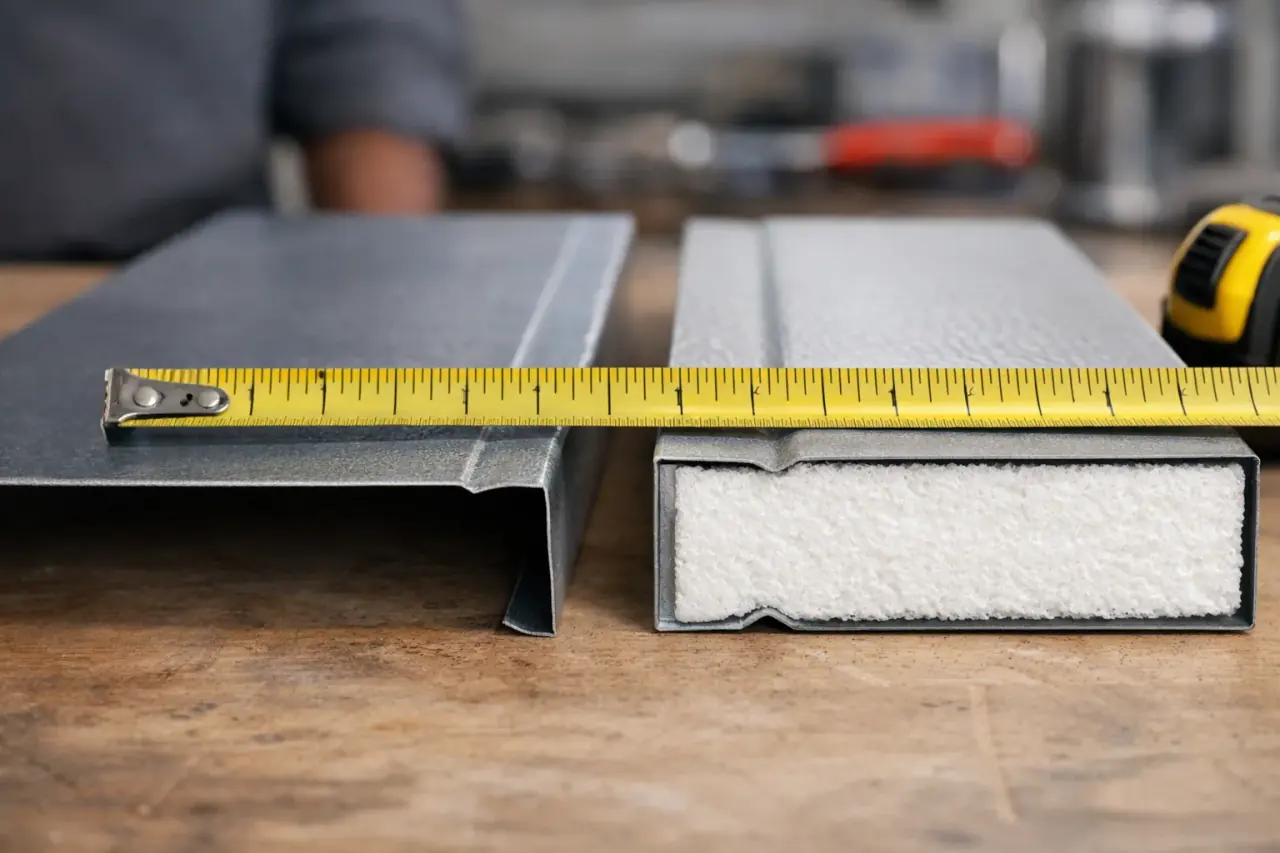
- Non-insulated (single-layer): One sheet of stamped steel, sometimes called a pan door, with an open back. Light, simple and the least expensive option. Some wood and aluminum doors are also uninsulated.
- Two-layer: A steel face with a slab of polystyrene foam bonded or fitted behind it, usually covered with a vinyl or paper backing on the inside.
- Three-layer (sandwich): Steel on the outside, foam in the middle and another sheet of steel facing into the garage. The foam is either fitted polystyrene or polyurethane injected between the skins.
The more layers, the more rigid, quiet and thermally resistant the door becomes, and the more it costs.
How much difference does insulation make to garage temperature?
It depends on the rest of the garage. An insulated door makes the biggest difference when:
- A shared wall connects the garage to the house
- The walls and ceiling are insulated, so the door was the weak point
- The weather seals around the door are in good shape
- The door faces strong sun or cold prevailing winds
In those conditions, the garage stays noticeably closer to indoor temperature, and rooms above or beside it are more comfortable. In an uninsulated, drafty garage, an insulated door still takes the edge off but can't do the job alone. Gaps around the door often matter as much as the door itself, so plan on fresh bottom and perimeter seals with any new door.
Be realistic about energy savings. Unless the garage is heated or cooled, an insulated door mainly buys comfort and protection for the rooms next to it, not a dramatic drop in utility bills.
Does polystyrene or polyurethane foam matter?
Yes, and it's one of the most important specs on a quote.
- Polystyrene: Rigid foam boards cut to fit and placed into the door sections. It's cost-effective and works well. Common advertised values are roughly R-6 to R-9, depending on thickness and whether there's a steel back skin.
- Polyurethane: Liquid foam injected between two steel skins, where it expands and bonds to both. It insulates better per inch, with common advertised values of roughly R-12 to R-18 or more, and the bonding makes the whole section stiffer.
Advertised R-values are often calculated for the panel itself. The full door, with its joints, edges and any windows, performs lower. When comparing brands, compare whole-door numbers if the manufacturer publishes them, and pay attention to thermal breaks between the inner and outer skins and the seals between sections.
What else changes besides temperature?
Insulation affects more than heat:
- Noise: Foam damps the steel so the door rattles less as it moves and blocks more street noise. A noticeable improvement under a bedroom.
- Dent resistance: A thin single skin dents easily from a basketball or a bumped bike. A sandwich door with an inner skin and bonded foam resists dents much better.
- Rigidity: Stiffer sections flex less in wind and when the opener pulls on the top section.
- Inside appearance: A three-layer door has a finished steel interior. A single-layer door shows the open back of the panels.
- Weight: Insulated doors are heavier. That's fine when the springs are sized correctly, but it's one reason not to mix and match parts between doors.
- Condensation: A single steel sheet that's cold on one side and humid on the other can sweat. Insulated sections reduce that.
When is a non-insulated door the smarter buy?
A single-layer door is a perfectly reasonable choice when:
- The garage is detached and never heated or cooled
- You live in a mild climate and only park in the garage
- The budget is tight and the money is better spent elsewhere
- The building is a shed, carport-style structure or outbuilding
- You're replacing a door on a rental or a property you plan to sell soon, and buyers in your area don't expect insulated doors
If you choose non-insulated, pick a heavier steel gauge (a lower gauge number means thicker steel) to reduce denting.
Who should choose an insulated door?
Lean toward insulated, and toward polyurethane, if any of these apply:
- The garage is attached to the house, especially with a bedroom above
- The garage doubles as a workshop, home gym, laundry area or hobby room
- You heat or cool the garage, even occasionally
- Your summers are hot or your winters are cold
- You want a quieter door or have kids playing ball on the driveway
- You live in a high-wind area such as coastal Florida, where the stiffer sandwich construction is common in wind-rated doors
How much more does an insulated door cost?
In typical U.S. pricing, moving from a single-layer steel door to a polystyrene-insulated version of a similar style often adds a few hundred dollars for a single-car door, and stepping up to a thick polyurethane door costs more again, especially for a two-car door. The gap varies by region, brand, door size, style, windows and installation conditions.
Factor in what you get for the difference: comfort, quiet, dent resistance and a finished interior. Total project pricing, including haul-away and new hardware, is broken down in what homeowners typically pay for a replacement door, and the install-day sequence explains what happens on site.
Can you insulate an existing door instead?
Most single-layer steel doors accept a retrofit insulation kit, which costs far less than a new door. The tradeoffs are lower R-values, exposed foam on the inside, and added weight that may push the springs out of balance. If you go that route, start with this walkthrough of kit types and fitting steps.
A note on springs: Adding a kit or swapping to a heavier door changes how much weight the springs must carry. If the door drifts down or feels heavy after any change, have a technician adjust or replace the springs. Never adjust torsion springs yourself; they store enough energy to cause serious injury.
What should you ask before buying?
Bring these questions to any quote:
- Is the insulation polystyrene or polyurethane, and how thick?
- Does the door have a steel back skin, or a vinyl or paper backing?
- Is the R-value for the section or the whole door?
- What steel gauge is the outer skin?
- Are there thermal breaks and seals between sections?
- Are new springs sized to this door's weight included, along with new tracks and a bottom seal?
- Does my opener have the capacity for the heavier door? If you're replacing it too, compare drive types side by side first.
Construction and looks are separate decisions; carriage-house, raised-panel and modern designs are all sold in both versions.
When is it time to bring in an installer?
A professional installer measures the opening, checks headroom and framing, sizes the springs to the exact door, and tests balance, auto-reverse and the photo-eye sensors before leaving. Call one when you're ready to compare doors side by side or if your current door is sagging, drafty or hard to balance. See the doors we supply and fit, or ask whether insulating your current door makes more sense. Quotes are free; start one online or explore the rest of what we do.
Key takeaways
- Non-insulated doors are single steel shells; insulated doors add polystyrene or polyurethane foam, often between two steel skins.
- Polyurethane sandwich doors offer the highest R-values, stiffness and dent resistance.
- Insulated doors make the most sense for attached, used or conditioned garages.
- Single-layer doors are fine for detached, unheated garages in mild climates.
- Heavier doors need correctly sized springs and an opener with enough capacity.